V&M Clinic
Morning OPD
Neurology Care with a Patient-Centered Approach
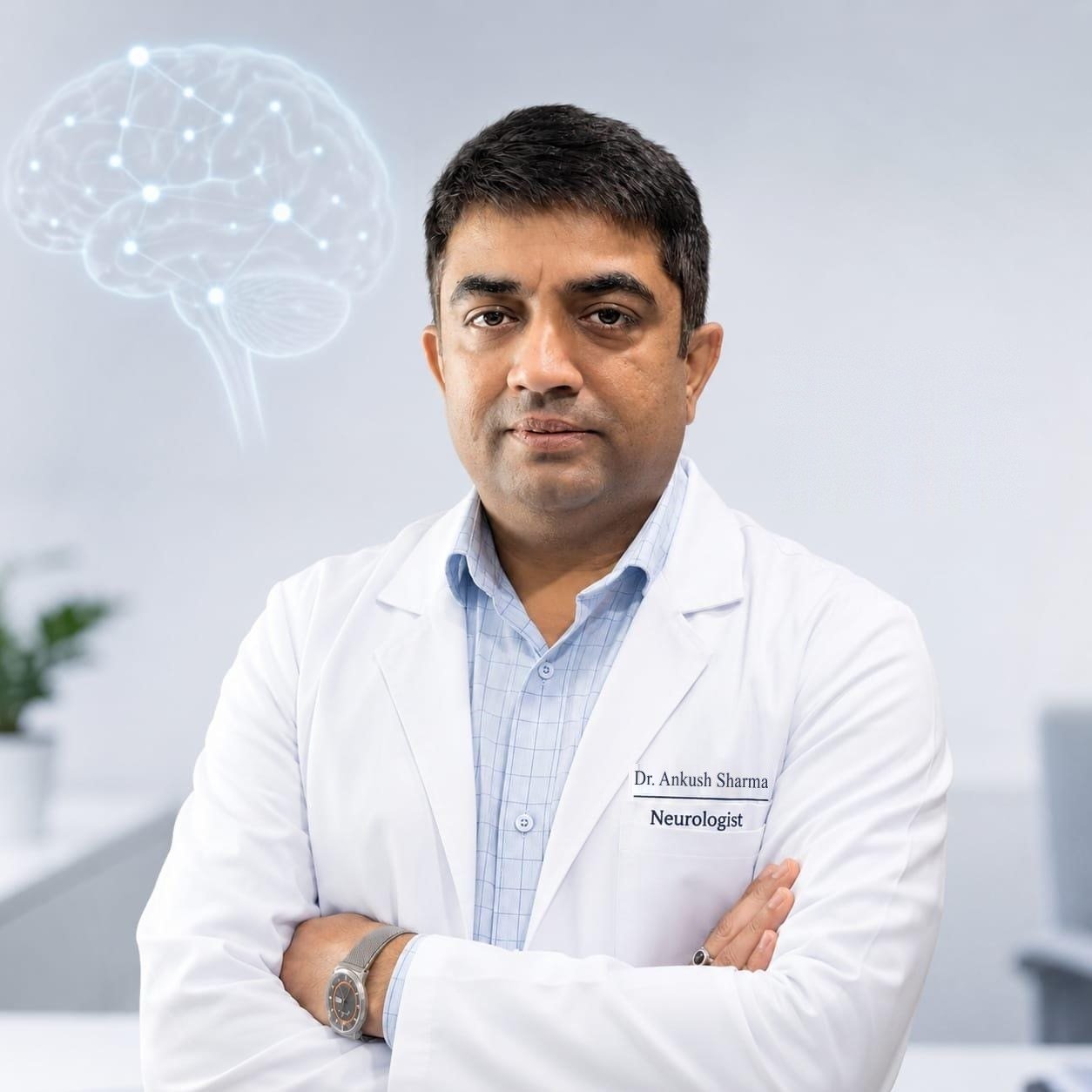
Dr. Ankush Sharma is a neurologist practising in Jammu and the doctor behind NeuroAxis Clinic. His practice covers disorders of the brain, spinal cord, nerves and muscles — the conditions that reach a clinic as headache, seizures, weakness, tremor, imbalance, numbness or a change in memory.
Consultations run across three OPD locations in the city, with morning, evening and Sunday timings, so a first visit and every follow-up after it can happen with the same doctor rather than starting again somewhere new.
Neurological problems are rarely settled by a scan alone. What separates a useful consultation from an inconclusive one is usually the quality of the history and the examination that come before any test is ordered — which is why the clinic is organised around giving those two things enough time.
Dr. Sharma sees patients with headache and migraine, epilepsy and seizures, stroke and its after-effects, Parkinson’s disease and other movement disorders, vertigo and imbalance, nerve pain and numbness, and problems with memory and thinking. Many arrive with reports from elsewhere and no clear explanation of what they mean; going through those properly is part of the visit.
Where a condition needs long-term management, the clinic’s three OPD locations and spread of timings are designed to make regular review practical rather than something that gets postponed.
The same six steps, whatever you come in with. Each one is there because skipping it is where neurological diagnoses usually go wrong.
Your account of the problem, in your own words, with enough time to finish it.
A structured examination — strength, sensation, reflexes, coordination, balance, speech and cognition.
Findings are drawn together into a working diagnosis. Tests are ordered only where they will change the plan.
What the diagnosis means, what it does not mean, and what the realistic range of outcomes looks like — without jargon.
A plan matched to your diagnosis, your other conditions and medicines, and how you actually live.
Progress reviewed at planned intervals, with the plan adjusted according to how you respond.
No consultation can promise a particular result. What it can offer is a careful assessment, an honest account of the options, and a plan that is reviewed as things change.
The conditions seen most often at the clinic. If your symptom is not listed, it is still worth asking — the assessment starts the same way.
Care works better when the person receiving it understands it.
A neurological diagnosis often arrives with unfamiliar words attached and a long treatment ahead. How well that is explained shapes how well the plan is followed — so explanation is treated as part of the treatment, not an afterthought.
Symptoms that seem unimportant to describe are often the ones that point to the diagnosis. There is time in the consultation to say all of it.
What is happening, why the tests were ordered and what the results actually show — said in language you can repeat to your family.
Where there is more than one reasonable option, the trade-offs are laid out so the choice is made with you rather than for you.
The same doctor at review, with a record of what has already been tried, so progress is measured against where you started.
Dr. Ankush Sharma consults at three locations across Jammu. Please call the listed number to confirm that day’s OPD before you travel.
Morning OPD
Evening & Sunday OPD
Late evening OPD
Send your details through the appointment form, or message the clinic on WhatsApp with the patient’s name, age and main complaint. For a sudden weakness, slurred speech, facial droop or a first-ever seizure, go to the nearest emergency department immediately.
This website provides general information and is not a substitute for medical advice.